
In Memoriam
Robert Moses, civil rights activist and education advocate, passes away
Moses was a pioneering activist who endured beatings and jailed while leading Black voter registration drives in the American South during the 1960s.

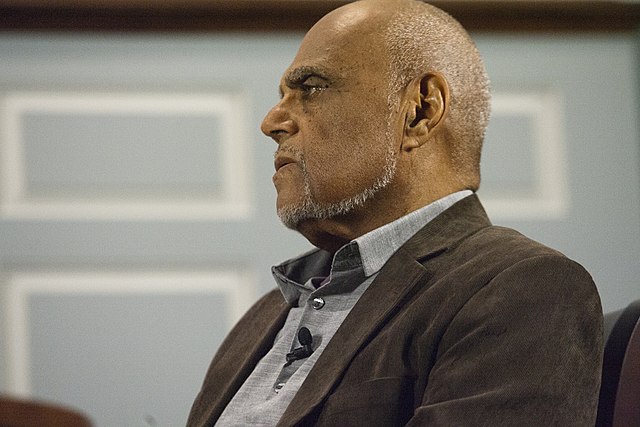

Robert Moses, a stalwart civil rights and education activist, has died. He was 86.
The NBC reports Moses wife confirmed he passed away Sunday morning in Hollywood, Florida.
No cause of death was revealed.
Moses was a pioneering activist who endured beatings. He was jailed while leading Black voter registration drives in the American South during the 1960s.
On Sunday, reactions to Moses’ death poured in across social media from admirers, educators and activists alike.
Reactions To Robert Moses Death
The Martin Luther King Jr. Center called Moses a “leader,” among other accolades.
“#BobMoses has died. What a brilliant, conscious, compassionately active human being. Educator. Organizer. Leader. Rest well, sir,” the center tweeted.
Director and activist Ava DuVernay shared a quote from the activist Tom Hayden about Moses after the news of Moses’ death.
“‘When people asked what to do, he asked them what they thought. At meetings, he usually sat in the back and spoke last. He slept on floors, wore overalls, shared the risks, took the blows, he dug in deeply.’ – Tom Hayden on Bob Moses, who has journeyed home and who loved us so,” she tweeted.
Robert Moses Was A Steadfast Civil Rights Activist
Moses was born in Harlem, New York, on January 23, 1935, two months after a race riot in the neighborhood.
His grandfather, William Henry Moses, was a prominent Southern Baptist preacher and a supporter of Marcus Garvey, a Black nationalist leader.
Education
Moses attended Hamilton College in Clinton, New York, where he was a Rhodes Scholar and became deeply influenced by the work of French philosopher Albert Camus and his ideas of rationality and urge for social change.
He later earned a master’s degree from Harvard University.
Moses worked as a teacher in Tanzania, Africa, returned to Harvard to earn a doctorate in philosophy and taught high school math in Cambridge, Massachusetts.
Southern Activism
Moses didn’t spend much time in the Deep South until he went on a recruiting trip in 1960 to “see the movement for myself.”
“I was taught about the denial of the right to vote behind the Iron Curtain in Europe,” Moses said. “I never knew that there was (the) denial of the right to vote behind a Cotton Curtain here in the United States.”
“The sits-in woke me up,” recalled Moses, discussing how his involvement with southern struggle began.
During his time in the South, the
young civil rights activist tried to register Blacks to vote in Mississippi’s rural Amite County where he was beaten and arrested.
When he tried to file charges against a white assailant, an all-white jury acquitted the man and a judge provided protection to Moses to the county line so he could leave.
In 1963, he and two other activists — James Travis and Randolph Blackwell — were driving in Greenwood, Mississippi, when someone opened fire on them and the 20-year-old Travis was hit.
In a press release from the Student Nonviolent Coordinating Committee, Moses described how bullets whizzed around them and how Moses took the wheel when Travis was struck and stopped the car.
“We all were within inches of being killed,” Moses said in the 1963 press release.
He later helped organize the Mississippi Freedom Democratic Party, which sought to challenge the all-white Democratic delegation from Mississippi.
But then President Lyndon Johnson prevented the group of mutineer Democrats from voting in the convention and instead let Jim Crown southerners remain, drawing national attention.
Second Chapter of Activism
Moses later started his “second chapter in civil rights work” by founding the Algebra Project in 1982.
The project included a curriculum Moses developed to help disenfranchised middle and high school students succeed in math.
Photo Credit: Miller Center
Discover more from Unheard Voices Magazine®
Subscribe to get the latest posts sent to your email.









Third suspect arrested in killing of Tasia Fortune

Angela Stribling, BET host and D.C. radio icon, dies at 58 after cancer battle

VP of Detroit funeral home found dead days after family said mother was mistakenly cremated

White Philadelphia teacher and activist admits to lying about being Black and Palestinian

Texas woman once sentenced to five years for a voting mistake has her acquittal upheld

Mississippi woman vanishes after trip to West Virginia as family urges public to help find her

Strangers raise $10,000 in 48 hours for Las Vegas piano tuner after viral video

Florida woman won’t face charges after fatally shooting man in Walmart parking lot
VP of Detroit funeral home found dead days after family said mother was mistakenly cremated

12-year-old Maryland boy saved mom’s life by stabbing boyfriend during domestic attack

Woody Shaw’s Avant‑Garde ‘Song of Songs’ returns to vinyl after 50 years through Jazz Dispensary’s Top Shelf Series

Kansas City’s Copper Boyz Ranch provides youth violence‑prevention through horsemanship

Nolan Wells’ family demands ‘thorough’ investigation: “What we’ve been told does not make sense”

Peabo Bryson, Grammy‑winning voice behind two Disney classics, dies at 75

OWN greenlights first-ever ‘Belle Collective’ spinoff Belle Collective: Birmingham





-
 In Memoriam6 days ago
VP of Detroit funeral home found dead days after family said mother was mistakenly cremated
-
 Crime & Justice1 week ago
Mississippi police make second arrest in death of Black woman found hanging from tree
-

 Real Voices1 week ago
Black Aerospace Professionals Development Director Haifa Baptiste dies in Costa Rica flash flood
-
 In Memoriam2 weeks ago
Sister Betsy Jean Farrakhan, eldest daughter of Minister Louis Farrakhan, dies
-

 Health & Wellness6 days ago
California couple welcomes rare mixed triplets weighing 19 pounds total, nearly breaking world record
-

 Crime & Justice2 weeks ago
Black Transgender woman Sophie Lee shot and killed in Baltimore
-
 Health & Wellness2 weeks ago
Mississippi teen Zach Brown, 17, critically ill after toxic herbicide exposure
-

 New Jersey2 weeks ago
Former Black N.J. officer wins $1.185M settlement after alleging retaliation for reporting captain’s alleged use of n-word
Pingback: Thomas Fortune Project : Preserving a Historic National Landmark